ETP Plants in Delhi NCR
ETP plants in Delhi NCR for industrial effluent, colour, COD and recycle.
What do you need to design an ETP plant?
We need a recent effluent analysis, or a sampling plan across shifts, covering COD, BOD, colour, oil and grease, metals and salinity. A plant sized on one good sample fails on a bad production day. Jaljiwan ETPs combine physico-chemical treatment, biology where the COD is biodegradable, and polishing to meet consent limits.
Effluent treatment plants for Delhi NCR factories and process units
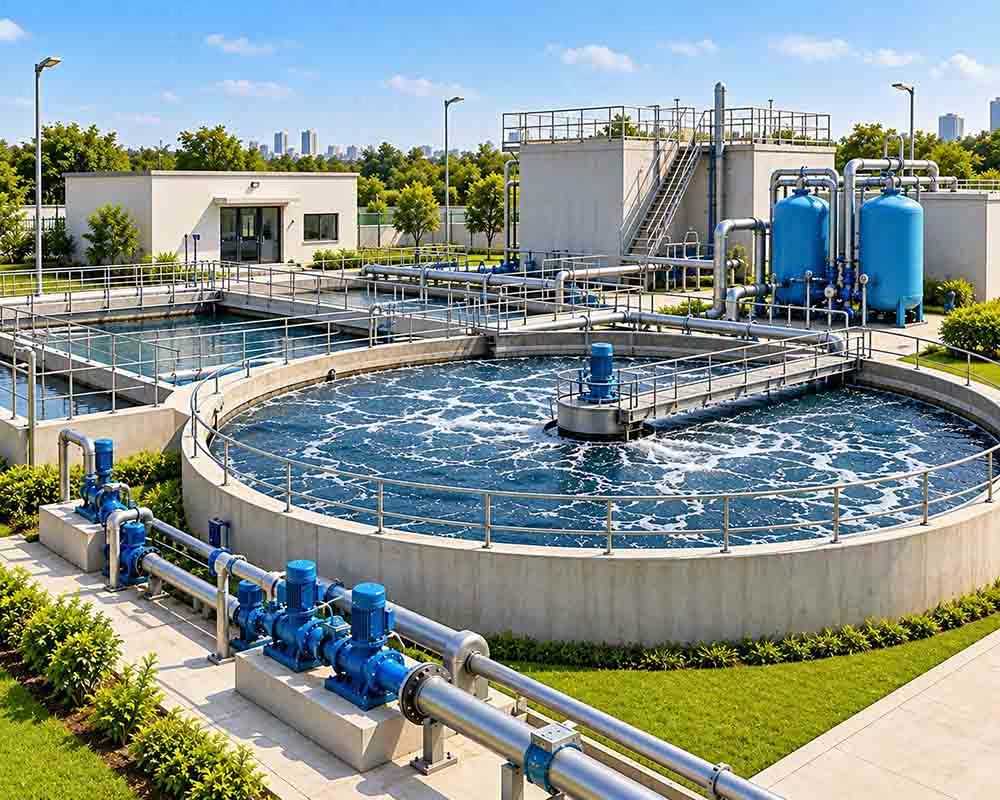
Industrial effluent is never one size fits all. Jaljiwan ETPs start from a clear reading of COD, BOD, colour, oil and grease, metals and salinity. We combine primary physico-chemical treatment with biological stages and polishing so plants in Delhi NCR can meet consent limits and reuse water where it makes sense.
Factories in Okhla, Bawana, Manesar, Noida and Faridabad send us very different effluent. Dyeing is not plating. Food wash water is not pharmaceutical intermediates. We ask for a recent analysis, or we help you plan sampling across shifts, because a plant sized on one lucky sample will fail on a bad production day.
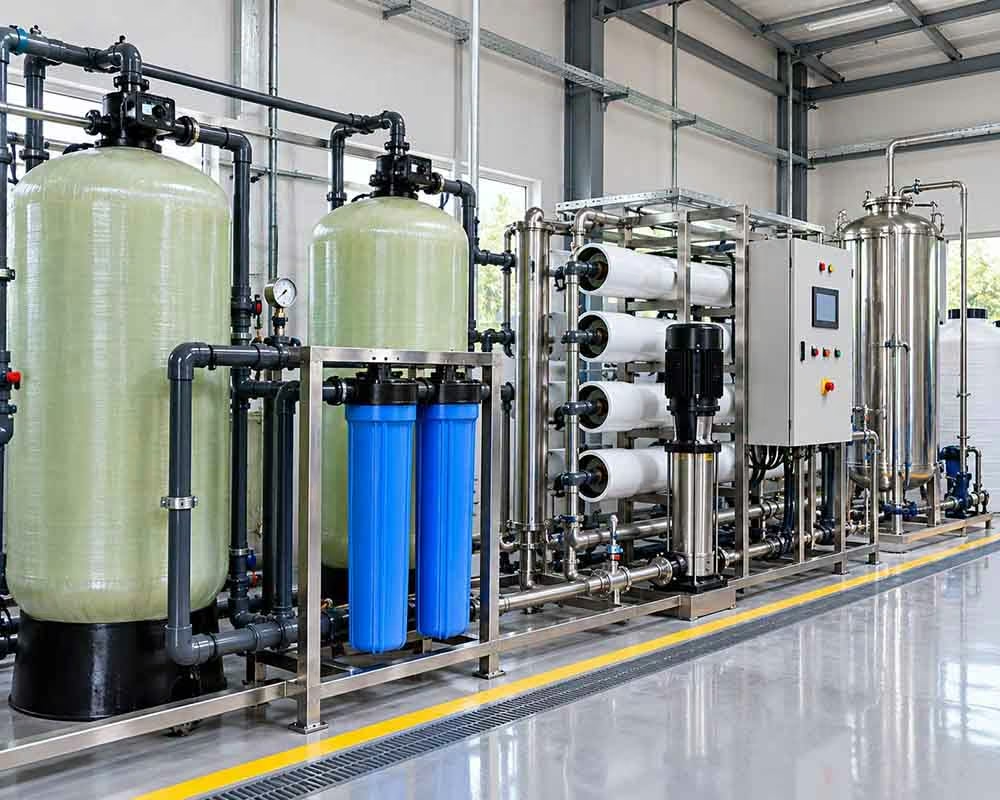
A typical ETP train equalises flow, corrects pH, coagulates and settles or floats solids, then uses biology if the COD is biodegradable. Colour and salt often need extra stages. If you want recycle, we only put RO after the water is clean enough to protect membranes. That sequence costs less over five years than a membrane skid that fouls every month.
Consent files need a design basis you can show an inspector. We write inlet and outlet numbers, chemical lists and sludge routes into the O&M pack. Installation is from Dwarka with site teams used to working inside running factories, so shutdown windows stay short.
Sewage from toilets and kitchens is treated on STP plants. Many campuses run both. AMC services cover operational reviews after handover. Contact Jaljiwan with effluent analysis and reuse goals.
Key Features
Lab-informed design
Treatability insights guide coagulation, biology, and membrane stages.
Primary + secondary trains
Equalisation, DAF/clarifiers, ASP/MBBR, and tertiary options.
Colour & COD control
Targeted chemistry and advanced oxidation where required.
Sludge management
Thickening and filter press packages sized to sludge yield.
RO reject awareness
Integration with upstream RO and ZLD roadmaps.
Compliance documentation
Design summaries useful for consent and audit files.
Benefits
- Treatment aligned to your actual effluent, not a generic catalogue plant.
- Pathways to water reuse and reduced freshwater purchase.
- Reduced risk of consent non-compliance and production interruptions.
- Modular expansion points as production scales.
Applications
How Jaljiwan delivers ETP Plants in Delhi NCR
ETP Plants specifications
Final figures are confirmed after water analysis and a site survey in Delhi NCR.
| Capacity | 5 KLD to multi-MLD |
|---|---|
| Primary treatment | Equalisation, pH, coagulation, flocculation, settling/DAF |
| Biological | ASP / MBBR / SBR / anaerobic options |
| Tertiary | Filtration, UF, RO for recycle |
| Sludge | Filter press / centrifuge as specified |
| Automation | Manual to PLC-based control |
Industries that use ETP Plants
Effluent treatment plant manufacturer in Delhi
Jaljiwan is an effluent treatment plant manufacturer in Delhi, working from Dwarka. We design the ETP from your effluent analysis, fabricate the mechanical package and dosing systems, and install and commission it on site. Civil tanks can be built by your contractor to our drawings, or we use skid-mounted tanks where the flow is small and space is short.
If your unit has a process line as well as toilets and a canteen, you may need both an ETP and an STP. Our guide on STP vs ETP differences explains where each one fits.
ETP and pollution-control consent in Delhi NCR
Industrial units in Delhi need consent from the Delhi Pollution Control Committee (DPCC) under the Water and Air Acts. DPCC groups industries as Red, Orange, Green or White. White-category units do not need Consent to Establish (CTE) or Consent to Operate (CTO) and submit an undertaking online. Red, Orange and Green units apply for both, and CTO is granted only after CTE. Sources: DPCC consent policy, DPCC online consent system.
The DPCC application form for Orange-category CTO asks for an ETP or STP effluent analysis report from a DPCC-empanelled laboratory, not more than six months old, where applicable. That is one reason to design the ETP around your consent conditions and to keep sampling points and flow records from the first day. Source: DPCC Orange category CTO form (PDF).
Units in Noida, Greater Noida and Ghaziabad apply to the Uttar Pradesh Pollution Control Board, and units in Gurugram and Faridabad to the Haryana State Pollution Control Board. Check the current category and conditions with the board for your district before the ETP is finalised.
What decides ETP cost
- Effluent type and strength: COD, BOD, oil, colour, heavy metals or pH swings
- Flow per day in KLD and how it varies by shift or batch
- Treatment stages needed: equalisation, neutralisation, chemical dosing, biological, filtration, and RO or reuse if required
- Sludge handling: drying beds or a filter press, and disposal arrangements
- Civil tanks or skid-mounted tanks, and the space available
- Automation, online meters and the outlet conditions in your consent
ETP Plants: common questions
Yes. Jaljiwan is an ETP plant manufacturer working from Dwarka, New Delhi. We treat industrial effluent for units in Delhi, Gurugram, Noida and Faridabad.
We design to agreed inlet and outlet numbers. A guarantee holds only while feed stays inside that envelope. A one-sample design will fail on a bad production day.
Often yes, after primary and biological stages are stable enough to protect membranes. Recycle RO on dirty effluent is how plants clog every month.
pH correctors, coagulants, flocculants, nutrients and oxidants as the process needs. The list is written in the O&M so the night shift is not guessing.
Yes. We install effluent treatment plants for factories around Delhi, Gurugram, Noida and Faridabad, including jobs that need colour or COD control.
After the effluent study, engineering and fabrication usually take several weeks to a few months. Civil tanks and shutdown windows on a running factory also set the date.
No. Colour, salt and COD differ. We size the effluent treatment plant from your analysis, not from a neighbour’s drawing.
Often yes. We check equalisation, biology and sludge handling, then add stages or recycle RO if consent or water cost requires it.
Often yes. Process wastewater from production goes to the ETP, and sewage from toilets and the canteen goes to an STP. We look at both streams during the survey and tell you what your site needs.
What to send with your ETP Plants enquiry
Every Jaljiwan proposal is built from a water report and a site note, not a catalogue number. Send these with your enquiry and the first proposal will be closer to final.
- What the factory makes and which processes discharge water
- Effluent flow per day (KLD) and any existing effluent analysis report
- Consent to Establish or Operate conditions already issued, if any
- Space available for the ETP and sludge handling
- Whether treated water must be reused or discharged